
If, like me, you went to college in the early 2000s in the US, you may have spent more than a few Saturdays at Forever 21 picking out the perfect outfit for a party. But did you think anything of it when you wore that outfit one time and then dumped it because, let’s be honest, there’s no way it was durable enough to make it through multiple wears? I sure didn’t.
Without writing a book (or two), which would be easy enough to do when addressing the problems with Fast Fashion, I want to give a quick overview of why I wish I had thought twice before buying clothes at Forever 21 only to get rid of them a short time later.
What is Fast Fashion?
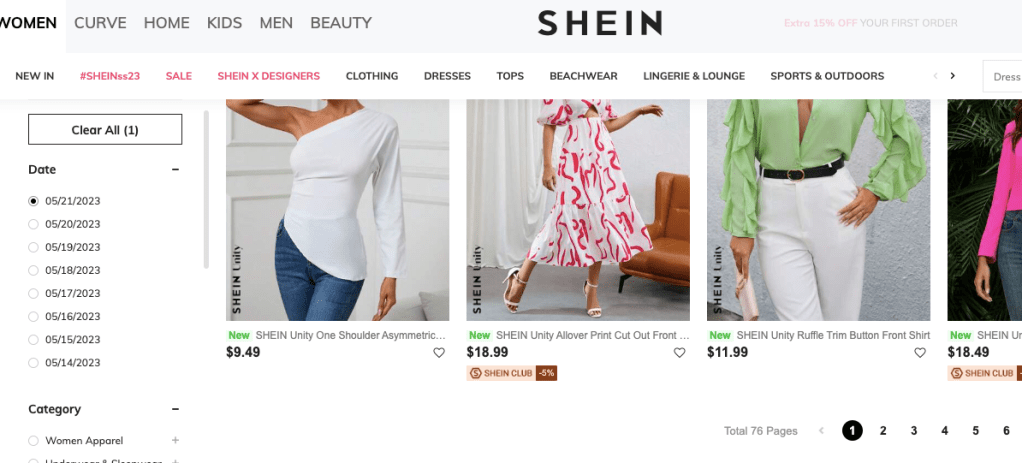
Fast fashion is the mass production of clothing that is made cheaply and quickly in high volume. Instead of relying on four seasons (or fewer) of styles, fast fashion relies on 52 (or often more!) “seasons” with new pieces and trends coming out weekly or even daily. Fast fashion really took hold in the 1990s with stores like H&M and Zara. In the online era, players like Shein (sometimes called “ultra-fast fashion”) have made the problem exponentially worse. Fast fashion is typically easy to spot – if you find a brand that has thousands of different looks and new options popping up regularly, often for extremely cheap prices, you probably found a fast fashion brand.
Why is Fast Fashion so Bad?
Arguments have been made that fast fashion is necessary and, in fact, helpful because it makes clothing more affordable. However, when low quality clothing falls apart after just a couple of wears, it starts getting really expensive really fast. Beyond the consumer cost, fast fashion has a real environmental and human toll.
Pollution and Waste
The production of clothing is dirty – especially when using the cheapest materials.
Much of fast fashion is made from polyester and other synthetics (i.e., plastic). Producing plastic clothing is carbon intensive (the clothing industry contributes up to 10% of global carbon emissions) and, once produced, the clothes release microplastics into the ocean. According to a 2017 International Union for Conservation of Nature report, 35% of all microplastics in the ocean are from synthetic textiles.
But plastic in clothing isn’t the only problem. It takes about 700 gallons of water to produce a conventional (non-organic) cotton t-shirt and 2,000 gallons for a pair of jeans – that’s more than 10 years worth of drinking water for a person drinking 8 cups of water per day. The water usage required by the fashion industry has been linked to lakes, including the Aral Sea in central Asia, drying up.
Textile dying and other production processes are also a major source of water pollution. In fact, according to the World Economic Forum, the fashion industry is responsible for 20% of water pollution worldwide.
And once produced, we already know that 85% of our clothing ends up as waste. This problem is exacerbated by fast fashion. Not only do consumers discard clothing that is designed, both in durability and trendiness, to only last a couple of wears, but brands are also discarding and destroying unsold clothing in massive quantities. While this practice is set to be banned in the European Union, it is still rampant globally.
Human Rights
The environmental toll of fast fashion is just part of the issue. Producing clothing on the scale of Shein, H&M, and Zara at such low prices is a human rights catastrophe. I’ve heard the argument about garment workers that the fast fashion industry is better than nothing because “at least they have jobs.” But that couldn’t be further from the truth.
In order to churn out clothing so cheaply and at the rate that these brands rely on, workers – usually women and children – will often be subjected to 14-16 hour work days and still do not make a living wage. Add to that, the working conditions are often unsanitary and unsafe. In April 2013, more than 1,000 garment workers were killed in the Rana Plaza factory collapse. The building had been determined to be unsafe but workers were ordered to report to work anyway.
So what can we do about it?
Don’t buy fast fashion. Just don’t support the industry. Check out Fashion Revolution or the Clean Clothes Campaign for resources and campaigns and get involved.
Advocate for legislation that forces companies to trace and take responsibility for their human and environmental impact, such as the New York Fashion Act, as well as for Extended Producer Responsibility laws that require brands to take responsibility for their products throughout the product lifecycle, such as California’s Responsible Textile Recovery Act.
Finally, take care of the clothes you own. Whether fast fashion or slow, keeping the clothing you already own in use longer can make a huge impact on the amount that we consume each year and reduce the demand for fast fashion.
 The Green Ostrich
2 responses to “Big Picture – What’s Wrong with Fast Fashion”
Great article on the importance of recognizing the harmful effects of fast fashion and taking action to reduce our consumption.
LikeLike
Thank you so much for taking the time to read it! Hopefully we can find ways to reduce our overconsumption of fast fashion!
LikeLike