
Last week, I wrote about the impact of plastics in our clothing on ocean ecosystems and on human health. But it gets worse. Microplastics are only part of the problem with our clothing….
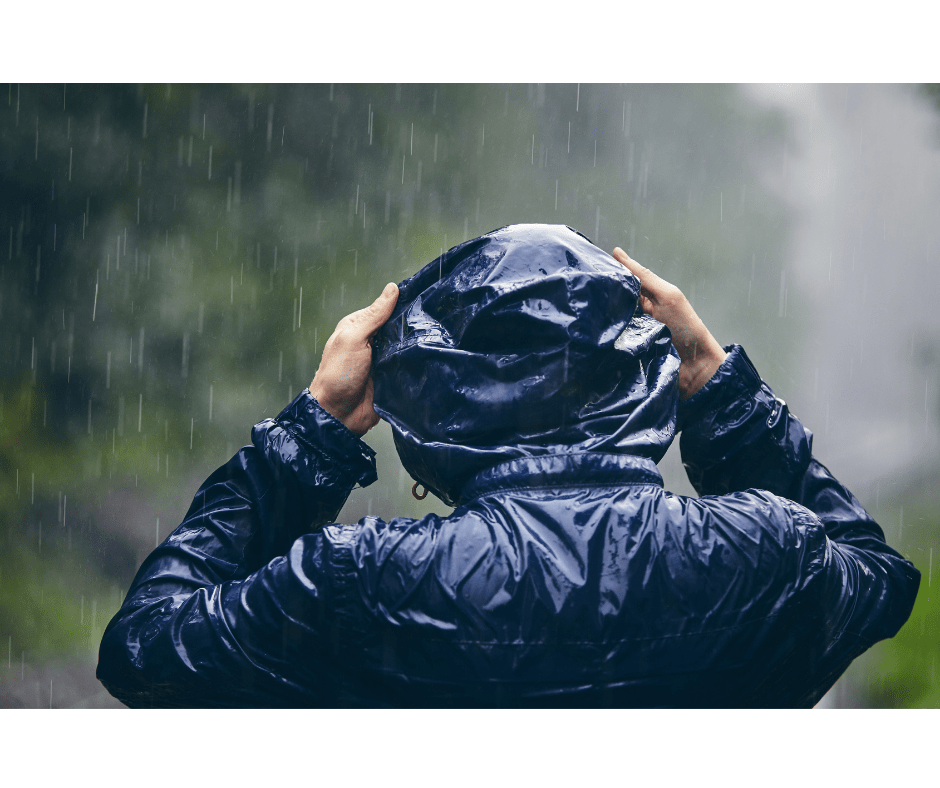
Take your rain jacket for example. Do you know why it works so well for water protection? Most likely, it’s because it’s coated in a durable water repellent (DWR) containing per- and polyfluoroalkyl substances (PFAS, sometimes called PFCs). PFAS are incredibly effective at repelling water, dirt, oil, and more and so are often found in clothing – especially outdoor gear. Using PFAS, the outdoor industry has been able to produce high quality gear that is breathable, comfortable, and waterproof. The perfect trifecta for hikers or anyone who happens to be out in the rain! Sound too good to be true? Well it is.
What are PFAS?
PFAS are a group of thousands of toxic chemicals, such as PFOS or the Teflon chemical that gave the famous cookware its non-stick finish. PFAS are also known as “forever chemicals” because they build up in our bodies and in the waterways and don’t break down. PFAS chemicals, which are in most of us, including newborn babies, have been shown to lead to health effects including certain types of cancers, low birth weight, endocrine, reproductive, and immune system problems, and weakened childhood immunity. Huh. Just like microplastics, it’s not good!
But Haven’t PFAS Been Banned or Phased Out?
Yes and no. Some PFAS have been phased out in the United States (though have not been entirely eliminated), including the Teflon chemical, but others that may be even more harmful (the short chain PFAS for anyone interested in the chemistry), have not yet been regulated in most cases.
As it stands, PFAS remain in our waterways (getting there through the manufacturing process), in cosmetics, in food wrappers, in furniture, and, of course, in our clothing. The outdoor industry is changing but not fast enough. Afterall, the products they make have to remain durable and waterproof, and PFAS are really, really good at that. Finding replacements isn’t easy and navigating the change through vast supply chains is complex. You can read about Swedish outdoor brand Fjällraven’s quest for PFAS free solutions here.
So What Do We Do?
Before you purchase outdoor gear (especially waterproof or water resistant gear), look into the company’s policy regarding PFAS. Can you find a PFAS free alternative for the product you are looking for? Support the brands that are doing it right. You can check out the NRDC’s report cards here to see how some of your favorite brands rate.
Advocate for regulatory changes in how PFAS are handled and/or phased out. In Massachusetts, where I live, a bill has been introduced to phase out these chemicals. What about where you live?
Test your drinking water. Even if we aren’t wearing gear or using other products with PFAS, we are ingesting them through our water. By testing and filtering, we can limit the amount we ingest.
Sometimes it doesn’t seem like there is a good option for our clothing – microplastics, PFAS toxicity, and I haven’t even addressed dyes or the environmental and health impacts of manufacturing clothing. My best advice – or at least the advice I’m trying to follow for myself – is to get educated, advocate (loudly) for change, and be an informed consumer/user.
 The Green Ostrich