
What does your performance running shirt have to do with blue whales?
I’ve said before that the most sustainable piece of clothing is the one you already own. Reducing clothing consumption is my number one priority when it comes to building a sustainable wardrobe and when thinking about the environmental impact of clothing. After all, the majority of emissions from an article of clothing comes from production and initial sale so if we reduce production we reduce impact, and if we keep clothing in use longer, we keep them out of landfills.
But, and this is a big but, not all clothing is created equally. A shocking 60% of clothing material is made from plastic. Ignoring for the purposes of this article the impact of producing that plastic clothing, I want to focus on what happens once the clothing (let’s say a performance running shirt) is in use.
If you wear a running shirt on a hot and sweaty summer run, you probably want to wash it. When you launder that plastic-based top, tiny microfibers/microplastics (defined as plastic fragments that are less than 5mm in length) are released into the wastewater. The wastewater then goes into a sewage treatment plant where it is filtered, but because these microplastics are so small, they slip through the filters and wind up in lakes, rivers, and oceans. According to one study, 700,000 microfibers may be released in an average washing load. Globally, this amounts to 200,000-500,000 metric tons of microfibers annually from synthetic textiles.
And what does this have to do with blue whales?
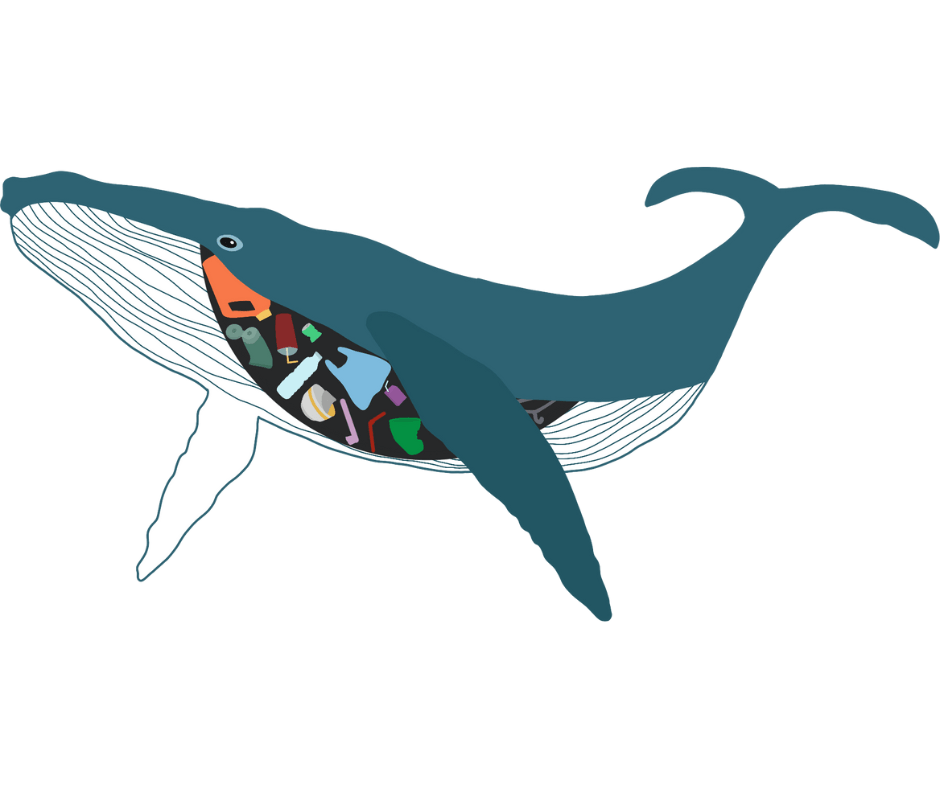
Microplastics released into the ocean tend to go beneath the surface where they are ingested by the smallest ocean creatures including krill (a shrimp-like species). Blue whales, which feed almost exclusively on krill, have been found to consume approximately 10 million pieces of microplastics per day from the krill. And blue whales are not alone. No fish eaters (be they other fish, bears, or humans) are immune from ingesting microplastics shed from laundering plastic clothing.* One study found that 73% of deep sea fish have ingested microplastics!
Scientists don’t yet know the full extent of the impact of ingesting microplastics for us or for other creatures, but they do know that it’s not good. Impacts on animals and humans have been found to harm, among other things, the digestive, immune, reproductive, endocrine, and respiratory systems.
Clothing is not the only source of microplastics in the ocean, but it’s far from insignificant accounting for 16-35% of microplastics released annually. So what are we supposed to do? On the one hand, I keep preaching that the most sustainable clothing is the clothing you already own. On the other hand, I just finished saying that the clothing you already own (plastic based running clothing, for example) is causing harm to our ecosystems and our health. The best option is probably to just go naked. But if you aren’t willing to go that far, there are a few actions to consider:
- Use a laundry filter that captures microplastics before they reach the wastewater
- Wash clothing in cold water resulting in less shed (though this is a contested finding)
- Washing clothing less frequently
- When you buy new/used clothing, look for plastic free options (acknowledging that no clothing is impact free and more natural fibers may have a higher impact on land and use more water to produce)
- Advocate for legislation that requires brands to take measures to reduce microfiber release in clothing
- Find out what your favorite brands are doing to reduce microfiber shedding in their clothing and, if they aren’t doing anything or aren’t doing enough, demand that they do better
There’s no perfect solution. No matter what we wear, our clothing has an environmental impact when produced, when worn, and when eventually disposed of. But rather than throw up our hands and say that we shouldn’t take any action because no action is perfect, we should take the best actions we can. Imperfect action is far better than no action.
* Note that most studies have been done on microplastics in seafood but there is growing research on other sources and, in fact, microplastics do exist in other food products as well including vegetarian and vegan ones.
 The Green Ostrich