
What will it take for us to change our clothing consumption behaviors? For three to four decades now, most of us have relied on being able to consume clothing, shoes, and other goods quickly and very cheaply. With the dawn of Amazon and other online retailers, overconsumption has only gotten easier. So how do we change this ingrained behavior? What motivates people to change? Money? Hmm….
Last week, France took a bold step – it announced a scheme to start paying people to repair their clothing and shoes instead of trashing them. Is this, perhaps, the answer? If you have clothing that is in need of repair and you have two options – trash it and buy new (spending money) or repair it and get paid – which would you choose? The financial incentive certainly makes it easier to choose the repair option.
But is getting paid enough to change decades of consumer behavior? I think it’s a fantastic first step but I think we still need to take a few other steps to truly change behavior.
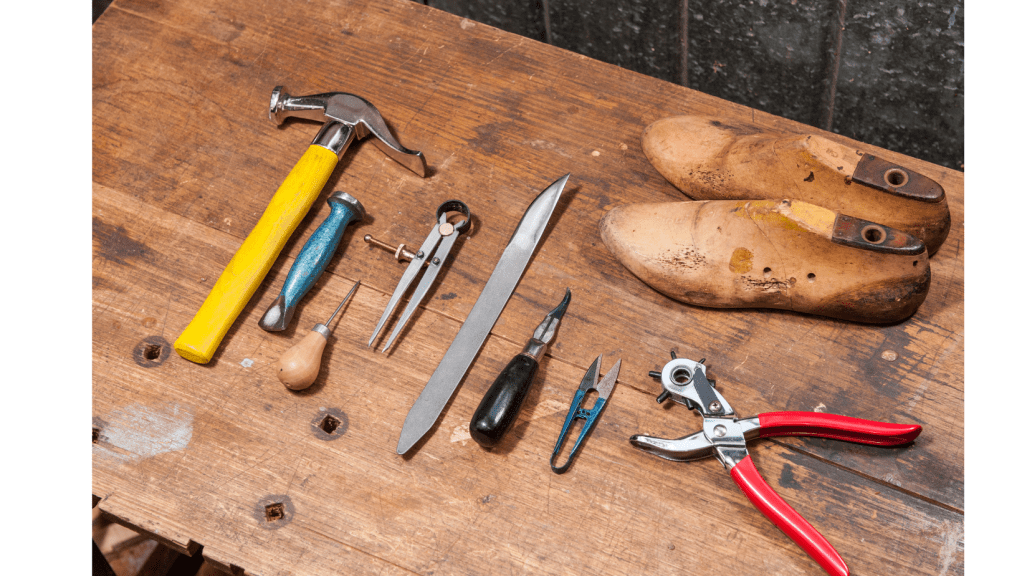
- We need to make sure tradespeople are available. Do you even know where your nearest cobbler is? In the US, for example, there were approximately 40,000 cobblers in the 1950s and only 6,000-6,500 today (maybe fewer as this statistic is from 2019). Most cobblers are older and as they lose business or retire, the shops are closing down. My small town cobbler closed up shop a couple of years ago and was replaced by a fancy olive oil shop. So it doesn’t really matter if I can get paid to repair my shoes if I can’t find a place to repair them. Maybe this is a chicken and egg story – maybe the demand for shoe repairs will increase the number of young people going into the trade. But maybe we also need to incentivize people to go into the trades. What do you think? Should we incentivize cobbler apprentice programs?
- We need to celebrate repairs. Some repairs make items look good as new. Other repairs may be more visible. Visible repairs as well as alterations for size have been part of fashion for over 2,000 years, but in the last few decades, we seem to have lost the art. There are companies and organizations trying to change this by making repairs trendy and exciting whether through patch-work, custom color dyes, or otherwise. This needs to be part of our changing mindset.
- We need to focus on quality. One of the main markers of fast fashion is clothing that is not built to last. If a cheap garment falls apart after only a couple of wears, it may not be worth repairing it – even for a small amount of money. But if a well crafted article of clothing that is meant to last a lifetime gets damaged, that is worth repairing! Clothing used to be handed down from generation to generation. The quality was such that it made sense. Those clothes were repaired because they were too good and too expensive not to be. Would you replace an expensive bike simply because it got a flat tire? Of course not. You’d repair it. The same should be true for our clothes, but that’s really most feasible and appealing with high quality garments.
So what do you think of France’s scheme? Personally, I love it! I think it’s a great start and I hope to see more of it. But I also believe that it’s going to take more than a few Euros to really change mindsets.
 The Green Ostrich