
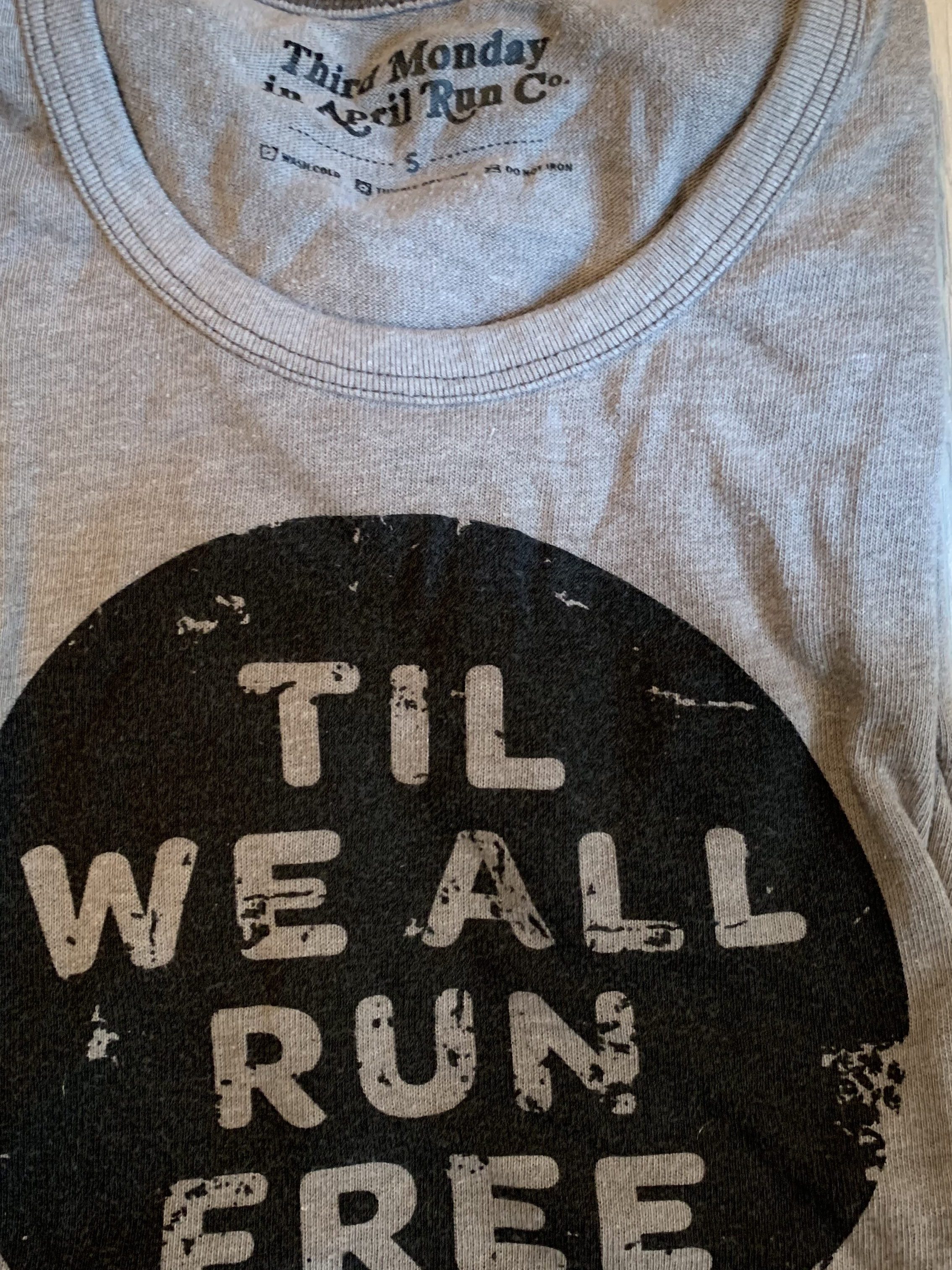
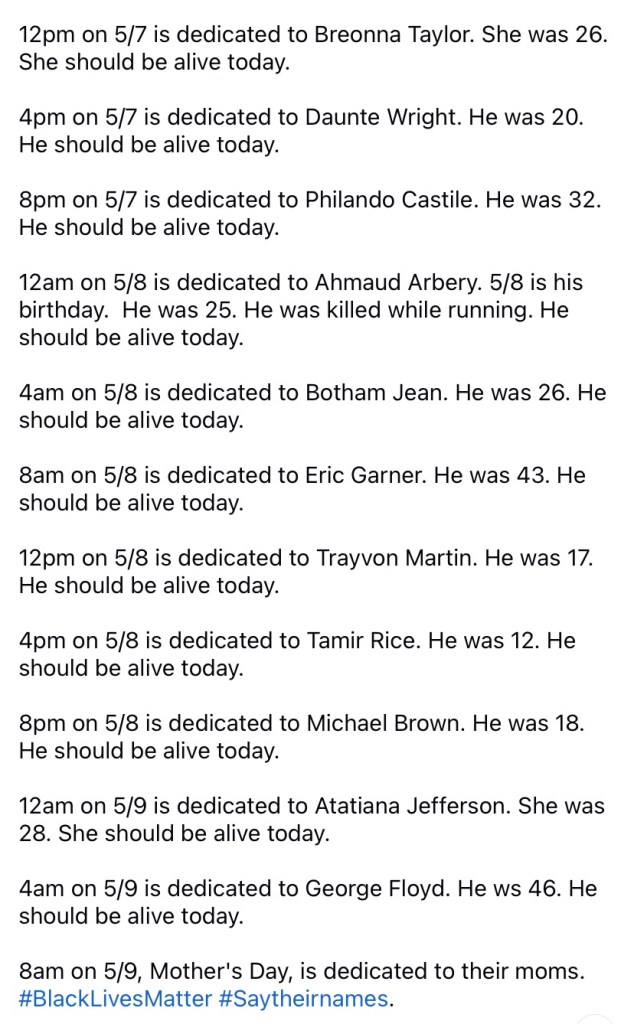
Two years ago, I ran 4x4x48 (4 miles every 4 hours for 48 hours) to raise money for the NAACP Legal Defense Fund and to honor the all too many Black lives taken by police and vigilante violence in the United States. My community (locally and nationwide) came together at a time when meeting up in person was still difficult due to the Covid-19 pandemic and raised over $13,000 for racial justice. My run intentionally overlapped with Ahmaud Arbery’s birthday (May 8 – Happy Birthday Ahmaud) – he was murdered while running in 2020 – and Mother’s Day – a day of mourning for too many Black mothers in this country. Each run began with a moment of silence and words in honor of a life that mattered.
This blog is generally about running and about the climate and the impact of clothing on the environment and so it is important to acknowledge that in the United States and globally, the climate emergency we are in is exponentially impacting people of color.
Globally, the people with the lowest overall emissions and doing the least harm to the planet are the ones who are facing the greatest threat from rising global temperatures. In the United States, our history of systemic racism means that Americans of color are significantly more impacted by climate change than white Americans.
Just a few quick examples:
- Neighborhoods that were redlined have far fewer trees than neighborhoods that were not redlined creating heat islands in America’s cities. The New York Times has a couple of really interesting and devastating pieces on this – one focusing on Richmond, VA and another that is interactive and shows the tree canopies in multiple cities across the country. Read them both.
- When Hurricane Katrina devastated New Orleans and the Gulf Coast in 2005, people of color were disproportionately impacted. Some argued that a storm doesn’t discriminate, but the storm wasn’t the only problem. As with the tree canopies, New Orleans’ historical zoning practices meant that Black residents were disproportionately living in low lying neighborhoods that were most at risk of extreme damage from a storm like Katrina.
- Black Americans and Americans of color including Hispanic Americans and Asian-Americans are exposed to more of every type of pollution than white Americans. Robert D. Buller, a professor at Texas Southern University stated, ““Empirical research is now catching up with the reality: that America is segregated and so is pollution.” Surprise surprise, this too has to do with our history of redlining.
There are so many reasons for this inequity in the United States alone – redlining, unequal access to health care, unequal access to housing, and so much more. Globally, the reasons are countless and include, among other things, a history of colonialism and exploitation in the Global South by the Global North.
As I focus my work on combating the climate crisis through running and through clothing, it’s essential not to forget who is most impacted and to realize that without racial and social justice, there is no climate justice.
 The Green Ostrich