
I’m a lifelong runner. I started when I was 16 and have competed in distances ranging from 1500m on the track to 24 hours up and down a ski hill. The beauty of running is that it is such a simple sport – put on a pair of shoes and go. Or is it?
The reality is that running is not simple and runners have a huge environmental impact. We fly to races across the globe. We collect shoes like it’s our job. We’re always looking for the newest GPS watch. We toss our plastic water cups on the side of the road at races. And the t-shirts… . I’ll have a lot more to say about the t-shirts in future blogs!
The Green Runners, a group of amazing athletes I volunteer with, is highlighting the impact that runners have on the environment and encouraging us to take individual and collective action to change the industry. The Green Runners are focused on four pillars:
- How you move (e.g., Are you flying to races or driving unnecessarily? Can you take public transportation or bike instead?)
- How you kit up (e.g.., What are you wearing when you run and how often are you buying new running clothes? Can you repair clothing instead of buying new so your gear lasts longer? How often do you replace your shoes?)
- How you eat (e.g., Are you eating a heavily meat-based diet? Are you able to reduce or eliminate consumption of animal products to lessen your environmental impact?)
- How you speak out (e.g., Are you asking race directors to include no-t-shirt/swag options for races? Are you calling out races that could be more sustainable and shouting out races that are crushing it on that front? Are you talking to anyone who will listen? Spoiler – that’s what I’m trying to do with this blog!)
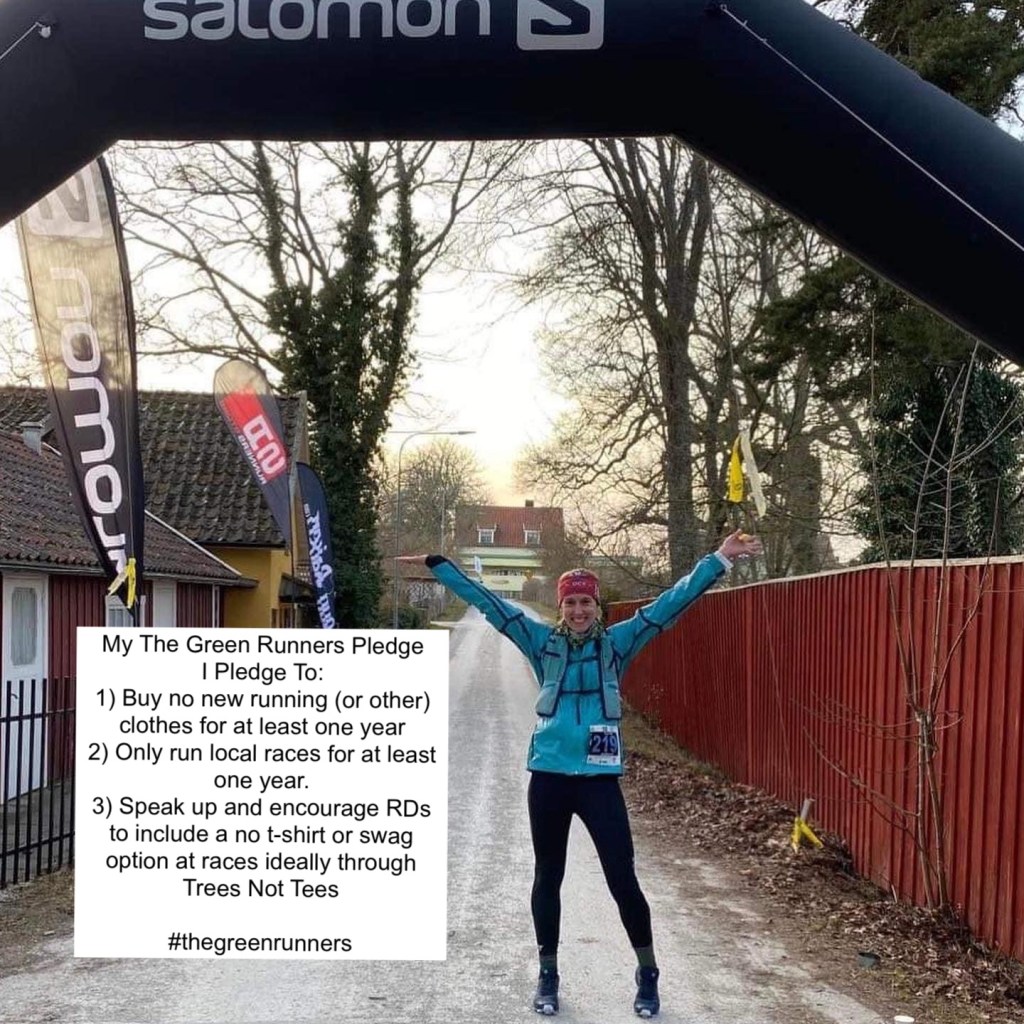
As a member, I have taken my own pledge:
In addition to the impact that runners have on the climate, we also need to recognize the impact that the changing climate has on runners. The New York City marathon was canceled in 2012 in the wake of unprecedented damage from Hurricane Sandy. The San Juan Solstice 50 Mile Run in Colorado was canceled in 2019 due to flooding. A race close to my heart, the Spartan Ultra World Championships, was canceled in 2022 due to wildfires near Lake Tahoe. Training through hot summers has become more difficult and, at times, unsafe. This past summer, I trained through multiple weeks of straight 90+ degree days when not long ago, a single 90+ degree day was an outlier. Air quality has gotten worse as wildfires rage through large parts of the United States. Races will need to start adjusting schedules and runners will need to make training adjustments to keep training safely in a changing environment.
As athletes we feel the impact of climate change acutely but we also can make changes to our own practices to limit our impact.
 The Green Ostrich